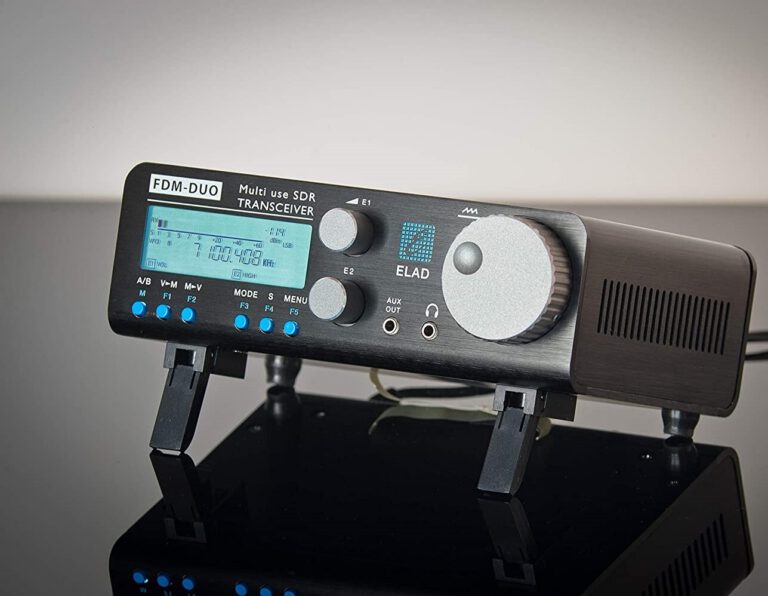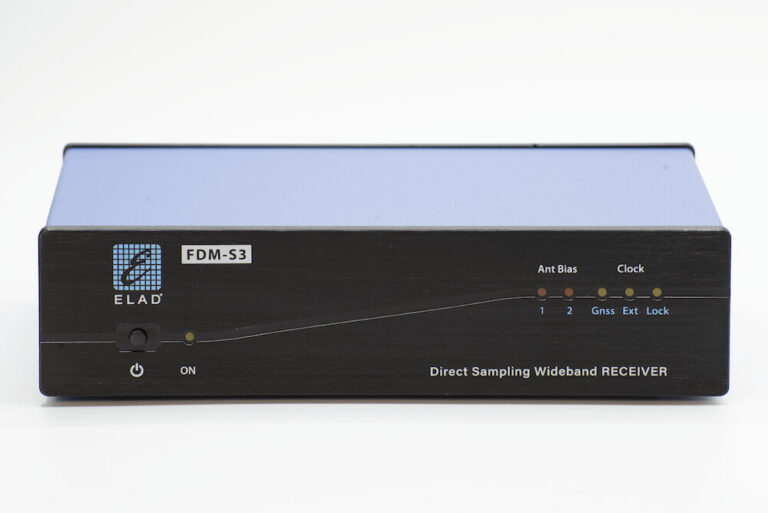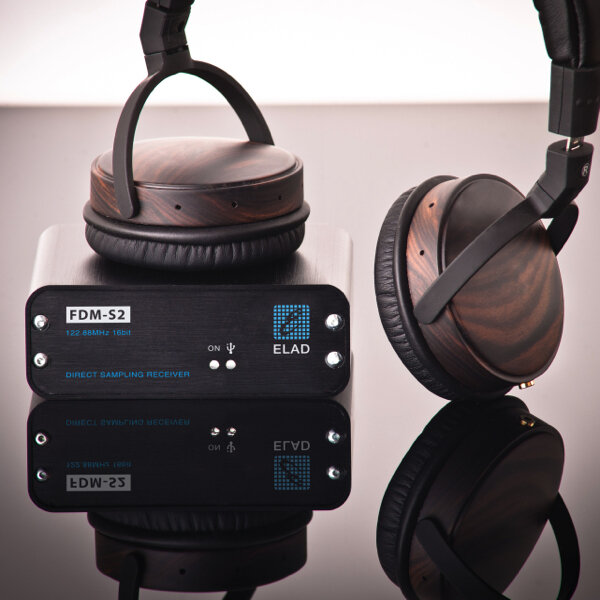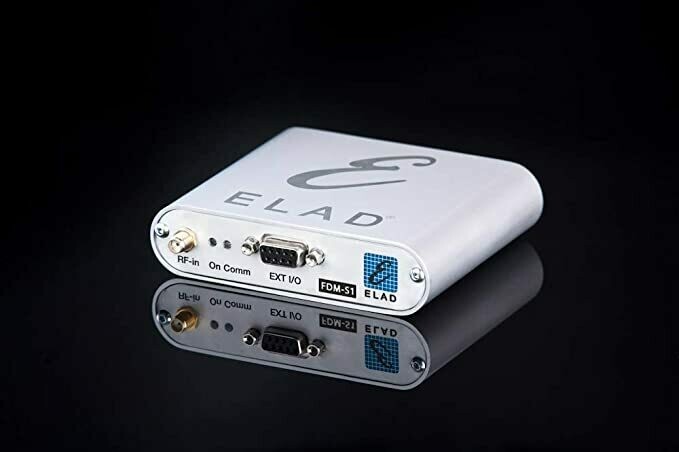
The FDM-DUOr is a shortwave receiver that uses state-of-the-art SDR technology but can be operated like a traditional radio. Familiar operating controls such as a large VFO knob, dedicated knobs for volume, filters and other functions, as well as buttons for frequently used settings, give the FDM-DUOr the ease of use of a classic receiver. A fast AD converter and powerful digital processing capabilities are the basis for excellent reception performance, as with the well-known FDM-S2 and FDM-DUO.
The receive frequency range is from 10 kHz to 54 MHz, although it can be tuned to higher frequencies for experimental purposes. The two antenna inputs are connected to optional preselectors that are selected according to the tuned frequency. A TCXO is used for good frequency stability; the oscillator sideband noise is very low, from -130 to -136 dBc, resulting in a low noise floor and excellent sensitivity. Alternatively, a precise external 10 MHz reference clock can be used as the main clock.
Depending on how the FDM-DUOr is used, with or without a computer, different demodulation modes are available: without a computer USB, LSB, CW, AM and narrow FM; with a computer WFM and DRM can also be received. DRM is available with the supplied software; no complicated installation of additional software is required.
Further hardware features of the FDM-DUOr are worthy of professional radios. The precision clock input has already been mentioned. A USB CAT interface allows remote control with various software, and the CAT protocol is fully documented. A “Mute” input to be connected to a transmitter allows the audio to be muted during transmission, providing seamless integration with an existing amateur radio station. Headphone and line out connections are also available. The receiver requires a 13.8 Vdc power supply; current draw is approximately 500 mA.